Aside from some unsupported claims, however, like that Donati grew up with this particular crook and was a close friend of that particular crook, there is very, very little, in fact nothing at all, that points to Donati's actual involvement, or for that matter, the involvement in the heist of any of the crooks they say he associated with.
Why would people go through all of this trouble?
So desperate are they to pin this on Donati, that in Episode Three Kevin Cullen says: "In that period, I could see a serious organized criminal saying, "you know what? This is a good time to do this?"Wow! That's compelling. Dudes I can totally see this happening back then.
On this solid ground, of what he could see, Cullen then asks: "Who would be in a position to do something like this?"And then in four voice overs you hear the reply:
Shelley Murphy: Bobby Donati
Myles Connor: Bobby Donati
Stephn Kurkjian: Bobby Donati
Martin Leppo: Bobby Donati
Everything in this documentary about Donati is anonymously sourced and uncorroborated. An anonymous source told Stephen Kurkjian, that at some point, he saw Donati with a paper bag with two Boston police uniforms in it. It is the kind of anecdote that might make for interesting filler, if Donati had been caught red handed, but to make the case based on these anonymously, sourced tales is ridiculous.
According to Kurkjian, twenty years after Donati died, another anonymous source said that Vincent Ferrara said, that Bobby Donati said, that he had robbed the Gardner to get Ferrara out of prison.
Donati allegedly told, but he never showed. Eighteen months later, Donati had done nothing to get Ferrara out of prison with the stolen Gardner art or by any other means. He was then found murdered in the trunk of his 1978 Cadillac Coup de Ville, very possibly because Donati himself was one of the chief reasons Ferrara was in prison in the first place, a possibility that was raised as an issue in open court, five years after Donati was slain. "Anthony M. Cardinale, lawyer for indicted New England Mafia boss Francis P. "Cadillac Frank" Salemme and his associate and codefendant Robert DeLuca, said the defense had just learned that Donati may have been the unnamed informant who wore a hidden device to record conversations of convicted Mafia captain Vincent Ferrara," the Boston Globe reported on June 24, 1997. In 2021 Cardinale wrote to me in a twitter DM that "Bobby Donati was a knock around guy who was essentially Vin Ferrara’s 'driver' (who I was then representing). When I met him [Donati], circa 1988-9, he was, in my humble opinion, not in any way involved [in the Gardner heist], just not what he would have been doing at the time."As far as Kurkjian's claim in his book that shortly before the Gardner heist, a close friend of his noticed that Donati was carrying two Boston police uniforms, and so then "pressed a taser playfully into Donati’s side and pulled the trigger," which "did quite a number on Donati," Cardinale said: "There’s no way anyone tased Donati and didn’t wind up in an intensive care facility or underground."
One allegation about Donati's criminal past, that they go into in this documentary, is the claim by an actual, named source, Myles Connor, that Robert Donati was one of the thieves in the Woolworth Estate burglary of 1974. The claim in the documentary is based solely on the words of Myles Connor, and not corroborated in any way.
In that theft, three works by illustrator N.C. Wyeth and one by his son, a watercolor by artist Andrew Wyeth, were stolen from the Woolworth family's estate, called Cleariew Farm in Monmouth, Maine. A reproduction of an Andrew Wyeth painting was also taken. Naturally to the irrepressible Kurkjian, in this documentary, it became that "they stole five or six Wyeth paintings. Important paintings. And he had a partner with him. His great friend Bobby Donati." The burglary took over place at some time over the Memorial Day weekend, on Saturday, May 25th according to Connor. Interestingly, the N.C. Wyeth works were then appraised at a higher value, than the work of his now more acclaimed, son, artist Andrew Wyeth.There is a happy ending to the story for nearly everyone except Myles Connor, who was arrested on Cape Cod, trying to sell the Wyeth paintings to an FBI undercover agent, in Mid-July of that same year. One of the other items stolen in that 1974 robbery, an antique Simon Willard grandfather clock, was recovered from Connor in another FBI sting in Bloomington, IL, fifteen years later. File under "The greatest art thief who ever lived," on one of Anthony Amore's "elaborate spreadsheets."
In this documentary, Connor claims, as he has stated previously, that Donati was one of the people who burglarized the Woolworth Estate, and further, that "it was Donati's deal." Donati was the mastermind, according to Connor. His word is the sole basis for this claim.
Before he became a "good friend" of Anthony Amore, Connor was labelled by him a "charlatan"in 2013, and "a real bad guy," in 2014.
But that was before Connor was promoted to high echelon disinformant, and given an extreme media makeover. Before he went from cop shooting con man to art thief extrodinaire folk legend almost overnight; his word on matters related to art crimes, gospel.Connor has time and again shown that he cannot keep his stories straight. Not that it matters, as with Amore, Connor can make claims that do not square with established, provable fact, without consequence.
In the case of the Boston MFA robbery in 1975, two men armed with nine-millimeter handguns, and a third man waiting in a stolen Ford Grand Torino, were responsible for the robbery, according to the news accounts of the day. But that becomes eight armed men, one with a machine gun, and a getaway van. The van serves as the setting for an epic struggle between an MFA security guard and the thieves, in Connor's retelling of that theft forty years later.
In a 2005 Boston Globe article, Connor's attorney Martin Leppo, who also appears in the Netflix documentary said Connor had "provided accurate information about the theft, but was unable to offer much help after his memory loss."
It seems Connor's memory has not quite returned, concerning other topics and not just the Gardner Heist. But he certainly is treated as though it has fully returned on all matters related to stolen art, he decides to weigh in on, in documentaries like this one on Netflix, and others on the "History" Channel, and heavily promoted blogs like "Last Seen Podcast."
This Globe article describing Connor's memory problems, written 20 years ago, has four of the principal players in this Netflix documentary represented: Myles Connor, his attorney Martin Leppo, and the two journalist who wrote it, Shelley Murphy, plus another lawyer, and Boston Globe reporter, Stephen Kurkjian. That's how utterly anaerobically sealed this narrative has become. Always and only the same old dissembling faces.
This Is A Robbery also suggests that a mistrust of outsiders may have played a role in the completely abject failure of the Gardner heist investigation.
"There was sort of, like, a code of silence. You know you could have twenty people in a bar witness a fatal shooting and nobody saw anything," the endlessly dissembling Shelley Murphy says.
But, in fact, the people whose mistrust of outsiders are the problem, are the very people who report about the Gardner heist in this documentary. This Is A Robbery provides the most unflattering portrait possible of Boston's working-class residents, using archive footage of an anti-busing/anti-desegregation demonstration from 1973, 17 years before the Gardner heist, from a local PBS affiliate, WBZ. The footage shows demonstrators clashing with police, and a mother, who seems to have left her dentures at home that day, standing outside of South Boston High School at a protest rally, a Roman Catholic priest at her side. And there is a voice-over by Boston Globe columnist Kevin Cullen: "Boston is a city of neighborhoods. It's really important to understand how organized crime works in the city of Boston."The Godmother?
And then this crockumentary shows Cullen talking about how much cocaine people were snorting in South Boston back in the day where he was living, at the time of the robbery, which he says was probably more than the people anywhere else in all of Boston. "Right on the bar tops" he recalls assuringly, like he's fingering his umpteenth thirty-day-chip, while relaying the tale.
The Boston of Netflix, This Is A Robbery, is a city of neighborhoods and the feral residents of those neighborhoods are to be trusted as much as they are trusting of outsiders, which is to say, not at all.
It is these residents, according to This Is A Robbery, who are withholding information from the authorities; not the journalist from Southie by way of Melrose, Cullen, the journalists from Dorchester, Kurkjian and Murphy, or the Gardner heist investigators from out of state, the operators of this cheesey, long running false narrative, but these residents in this "city of neighborhoods," who are to blame for the mystery. This is just one of the many gaslighting aspects of this documentary, and it provides ample justification for city residents to be mistrustful of outsiders, if they weren't already, especially of people in the media. But it's a small price to pay, scapegoating the powerless, to keep the real story of the Gardner heist under lockdown, for another few years.When someone asked Kurkjian, a year after his book came out, "are you convinced that Rick {Abath] the guard had no part in this?" Kurkjian replied: "No I'm not I'm not convinced. There's a lie when I interviewed him for the book, I had interviewed him many times over the years, he always told me that he was a druggie, but he said he was on pills, and he was on pot. And then when I interviewed him for the book, he told me he was on, he had used cocaine. and that — cocaine in 1990 — you're in a different group of people, than you are buying pot. You're with the bad guys."
So, it was significant enough to change Kurkjian's view of Abath, he said, but not significant enough to include in his book. So, who is holding back what they know?And when Abath was interviewed by CNN, an interview Kurkjian claims to have set up, on a news special that Kurkjian himself was interviewed on, Abath said: "They finished cuffing me and they cuffed my partner and very dramatically said, 'Gentlemen, this is a robbery.'"
But in Kurkjian's book which he began about the time that interview aired, and completed the following year, he wrote: “This is a robbery, gentlemen,” one of the men said almost matter-of-factly.“Who is holding back what they know?
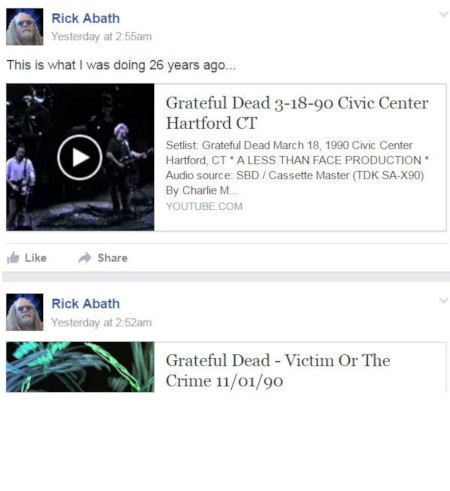
Why does Kurkjian make the moment less dramatic? Why does he change the order of the words? Because "Gentleman, the is a robbery," really does not fit the cast of character presented in his book, or in this documentary, which in its very title shortens the robber's words to:This Is A Robbery. The way the thief said it, sounds more like James Bond, or someone in "The Thomas Crown Affair." And as Kurkjian said in a 2016 interview, "the most important thing is to keep [your] eye on the narrative," and when it comes to the Gardner heist, the narrative and the truth are incompatible. In Master ThievesKurkjian wrote: "Abath did not understand the size of the robbery or what had been stolen until he read the headlines the next morning coming out of his hotel in Hartford." "Realizing immediately that he had to be considered an accomplice, and that his leaving the city would raise deeper questions, Abath abandoned any plan he had to stay to see the band’s second performance that night and drove quickly back to Boston."But in Episode Two of this Netflix documentary, there is an audio recording of Abath saying to Kurkjian in a 2013 interview, that after the robbery, "I was planning on calling in sick that next night, because I had tickets to the Grateful Dead shows in Hartford. So, I left town and went down to Hartford to see the shows. And I had a great time, drinking and smoking reefer. I did a bunch of acid the first night. I think I did mushrooms the second night. Then I came back to Boston.
So, who is, not only telling not telling what they know, but also instead plainly telling people what is at variance with what they know? How about? Shelley Murphy: Stephen Kurkjian Myles Connor: Stephen Kurkjian Stephen Kurkjian: Stephen Kurkjian Martin Leppo: Stephen Kurkjian In a 2021 editorial Kurkjian wrote: "Although the FBI remains mum about the status of the investigation, the mystery surrounding Bobby Gentile’s involvement remains a reminder that a new approach might be worth considering." And: "Since the theft in 1990, Boston has changed; it’s become a world-class city and omertà[a code of silence] is no longer the operating principle."But then two months later, the Boston Globe reported: "Over the past year, [Paul] Calantropo has been working behind the scenes with an unlikely assortment of sleuths — including a retired law enforcement official, two former convicts and retired Boston Globe investigative reporter Stephen Kurkjian — in hopes of finding the artwork, which Kurkjian did not include in his editorial.
So, it is indeed Stephen Kurkjian who is not disclosing what he knows.
The only outsiders in this documentary are the people from "the neighborhoods," in an actual Gardner heist context, who are never interviewed, and merely serve as a surly backdrop, and yet it is they who are accused without evidence, of having harbored the perpetrators, and the coverup. Diversity? Everyone is white, and there was just one woman, Shelley Murphy. Except for an eyewitness interview. All of the on-camera people easily qualify for the senior discount at Sea World. It's marketing professional's dream-demographic, if your clients are in the reverse home mortgage and vinyl replacement windows business. In others words, an accurate microcosm of the individuals, who can be trusted with working the federal law enforcement, and courthouse, beats in Boston these days.Aside from the primary source interviewees, it is a collection of guys with books, guys with law practices, guys who defending rich folks in federal court, Shelley Murphy, also a true crime author, and more guys desperate for some free publicity.
The FBI didn't even interview people in the "neighborhoods" about this case, and yet this documentary wants to suggest that one of the reasons that the case isn't solved is because the people in the neighborhoods are suspicious of outsiders and would not talk.
They're suspicious? They're suspicious of outsiders? Both Last Seen Podcast and This Is a Robbery were made in secret. This Is A Robbery did about as much in the way of community outreach as the FBI, did in their Gardner heist investigation, which is zero.
So, who's holding back? Who is not sharing what they know again? Family members and loved ones need to share what they know?Writing in the Boston Globe in 2009, Shelley Murphy, who makes frequent appearances on this Netflix crockumentary, said of Myles Connor's book, 'The Art of The Steal,' that "the book is clearly shaded by Connor's version of the truth." It does not seem, however, that Murphy advised the Barnicle Brother who made this documentary, the extent to which Connor's words are inconsistent with the facts.
Or maybe she is herself at times fooled by Connor. Since his claims are not fully cross checked in this review.
In her review, Murphy wrote that "Connor masterminded the MFA robbery, donned a brown wig and leather chauffeur's cap to cover his red hair, grabbed the Rembrandt, and cracked its frame while making his frantic getaway."But the description police sent out of the thief on the day of the robbery said that the thief who grabbed the Rembrandt was "a white male, about 20 years of age, 5-foot-9 about 140 pounds, with long blond hair." Connor was 32 at the time, shorter, heavier, and claimed he was wearing a brown wig
Even though the Woolworth art theft was a burglary, not a robbery, and took place sixteen years earlier in rural Maine as opposed to a big city, it could potentially indicate something. That Donati should have been interviewed by the FBI, for instance, which he was not. It could show he had at least some of the ways and means as well as the inclination to pull off a Gardner museum type heist. However, not long before the Woolworth robbery, while "on bail under indictment and still on parole, Donati was arrested by the Secret Service for receiving stolen property and possession of counterfeit bills." He was sentenced in July of 1974, less than two months after the Woolworth burglary, and separately.But even if the Feds had released Donati after his arrest, while out on bail, under indictment for arson and on parole for armed robbery, Donati was sentenced on to state prison on May 22, 1974, only three days before the May 25, 1974 Woolworth estate burglary. News accounts reported that the burglary occurred sometime over the May 25th-May 28th Memorial Day Weekend. Connor's book says that the burglary was on that Saturday of the holiday weekend.
Donati was sentenced in Middlesex Superior Court to 4-8 years in Walpole State prison on May 22, of 1974. for the arson, as well as an unspecified amount of time as well as an unspecified portion of his 12-20 year sentence for the armed robbery, for which he was still on parole.While those sentenced to prison on Federal Court sometimes get time to get their affairs in order or file an appeal, those sentenced in the state court system go straight to prison from their sentencing.
In July, after Connor's arrest with the stolen Wyeth art, Donati received ten years on the federal charge and 4-8 on the state arson charge, to be served concurrently. Had he been caught, burglarizing the Woolworth Estate at that time, while out on double bail, if such a thing is even possible, Donati risked receiving longer sentences and nonconcurrent longer sentences, so more than sixteen years instead of ten for the crimes for which he had already been convicted plus whatever he got for the Woolworth crimes, which would represent a completely unacceptable risk. But it would also have been an unacceptable risk for feds to let out a guy an arsonist, who was out on parole, for the armed robbery of $40,000 worth of furs from a Boylston Street store. seems doubtful that the feds would risk the embarrassment of letting a parolee they arrested while out on bail, out to get out and get caught on additional crimes. The lax treatment of Donati was soon news and the feds were quoted as not happy about it. Given the fact that for Donati to have helped rob the Woolworth estate, 16 years before the Gardner heist, he would have to have been: on parole, on bail from state felony charges and federal felony charges, and thus unlikely to have been let loose to commit more crimes. This Is a Robbery should be required to offer up more evidence than the questionable word of Myles Connor, in any case. Even under the best circumstance it is a weak indicator of Donati's possible involvement without a good deal more supporting evidence.April 8, 2021 The Good News About the Netflix documentary about the Gardner Heist, This Is A Robbery
Despite my incessant griping yesterday on twitter I prefer the term "fact checking," I'm pretty satisfied about the new Netflix documentary on the Gardner heist, "This Is a Robbery." For one thing, I like how Robert Fisher pushed back against the ridiculous falsehood that the guy in the heist eve video is Gardner Heist is a museum employee. It also reports on several aspects of the FBI's investigation, which might well lead people to question the sincerity of purpose in Gardner Heist investigation, especially as it relates to apprehending the criminals. It also delivers solid interviews with Gardner Heist eyewitnesses never heard from before, as well as Gardner security staff, although these interviews are not as important or interesting as the one by podcast Empty Frames of former Gardner security guard, Marjorie Galas. Rather than flooding the zone with, um, a myriad of theories like Last Seen podcast did, this documentary focuses fairly narrowly on the state sponsored disinforming narrative that posits that Bobby Donati and some members of the TRC automotive gang were responsible. Dissembling shills Stephen Kurkjian and Shelley Murphy are permitted to make their case in full in this documentary, in their role as reporter-which-is-kinda-sorta-the-same-thing-as-a-historian. A case which real historians 30 years from now, will only find noteworthy, if at all, in how it showed just how servile, and slavishly devoted some reporters could be in spinning a narrative that is pleasing to their sources, and to do anything that keeps them in the Gardner heist "key," in perpetuity, so that even if visitors from Mars confess to the crime and return the art tomorrow, they'll be the ones standing under the basket to take thee easy bank shot. Barnicle Brothers claim they vetted all theories. Hah. I make a more compelling case in one tweet than they make in four episodes. But the documentary does lay it out in lavish, unabashedly inconsistent detail. Episode four presents the whole case of what "The Gardner Heist" author, Ulrich Boser once called "the crew-ish," theory, which is that we don't know precisely who did the Gardner Heist but we know the crew is. These local toughs, associated with Robert Guarente, Robert Gentile, Robert Donati and Vincent Ferrara. Waitching it, one might well think that the Barnicle Brothers believe that Boston's cottage industry of Gardner heist artisans is on the level, that somehow only the Boston Police and Massachusetts State police were shut out of the case, and not other honest members of the community, from other professions with a public role, such as journalists too.I do agree with an ApolloMagazine review which termed this documentary's gaggle of whodunnit-ers as "red herring suspects," but at least the documentary takes the theory from a bunch of aspersions enveloped in a dizzying of array of cross-references, qualifications and digressions into more of an assertion phase of the theory, that is something resembling a coherent whole, that takes a stand: These are the guys.
Yes there an embarrassing number of factual errors but in presenting their theory their effort is so lacking in facts that they really cannot be faulted for getting them wrong.
At least the theory is no longer just "broadly hinting" as Howie Carr described it in in 2015, but in this documentary it is flushed out in the open so people can decide for themselves if it makes any sense at all, which it unfortunately does not, although many no doubt like the Barnicle Brothers themselves will accept this institutionally disseminated but nonetheless crackpot theory. I for one intend to go over every detail with a fine tooth comb and demonstrate just how foolish and illogical this theory of the case is. It is also unfortunate, that in the strain to make their case, weak as it is, that the city of Boston, its working people, and neighborhoods, its critical thinking abilities and professional integrity are put in such a negative light, on are unfairly and inaccurately, put in such a negative light, in a way that is completely unsupported by the facts. April 29, 2020 The Inconsistencies in Rick Abath's Story When it comes to the Gardner Museum robbery, sometimes it seems like the guard who let the thieves in, Rick Abath, is the only one who can keep his story straight. Maybe it's the way he keeps saying he was handcuffed to an electrical box for seven hours when everyone else, who has ever had a say in the matter, tells a different story. But then, his statements on the case have been few and infrequent, the first was not until 15 years after the heist, and the inconsistencies in his story are quite glaring, and in some cases significant.Most recently, in March of 2019, Abath posted a third version of the first chapter of his book on the case, which he has been sharing with the press and or posting online since 2013.
Whether he has gotten past the first chapter, or ever will, remains to be seen. Continued...
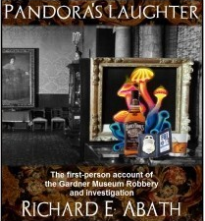
April 15, 2020: 'Deflections,' a Gardner Museum Robbery Slideshow
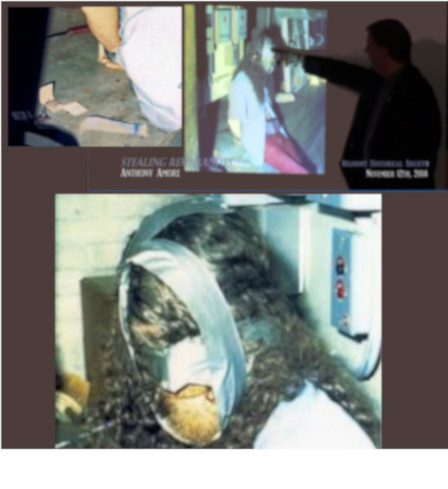
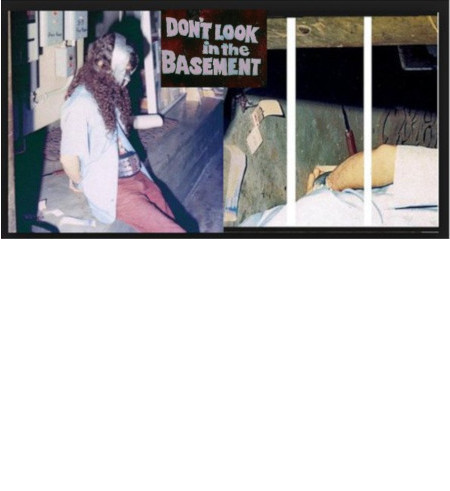
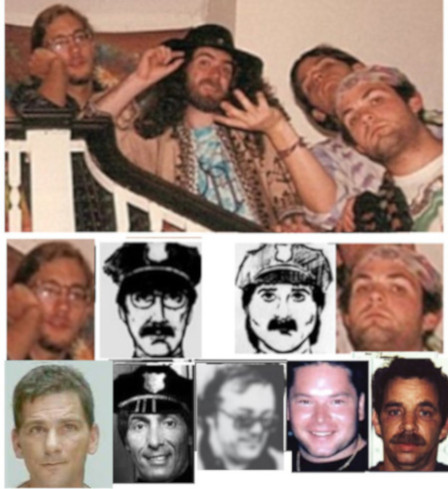
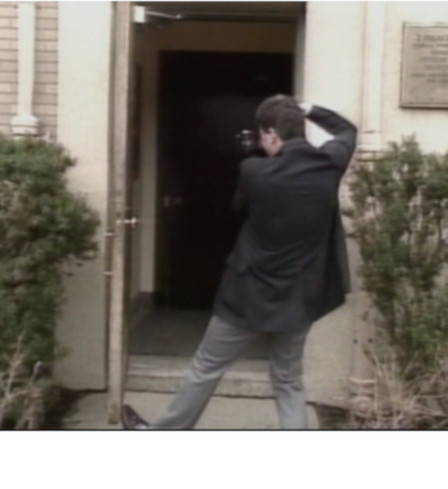
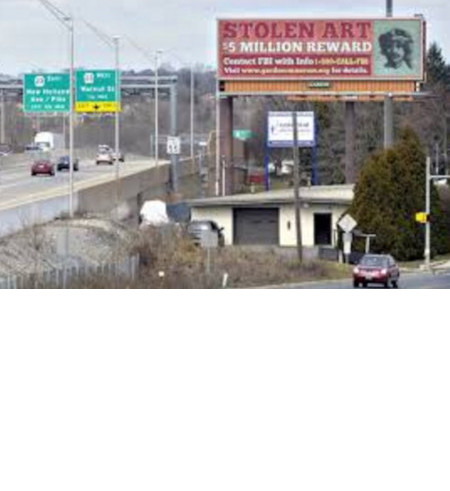
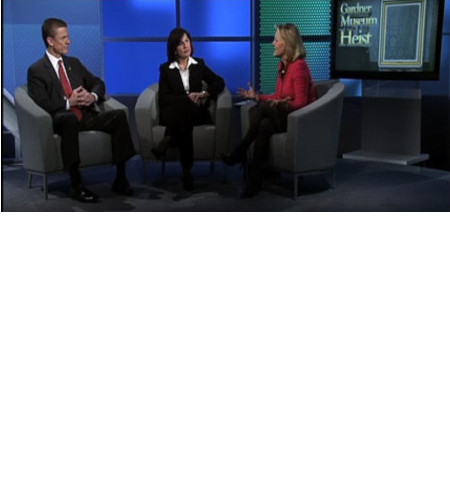
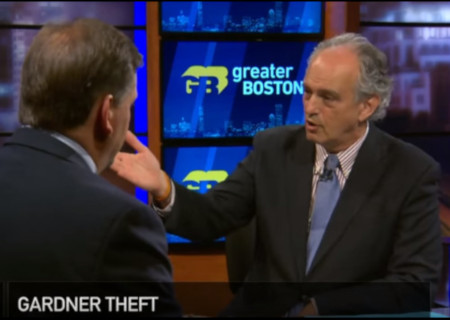
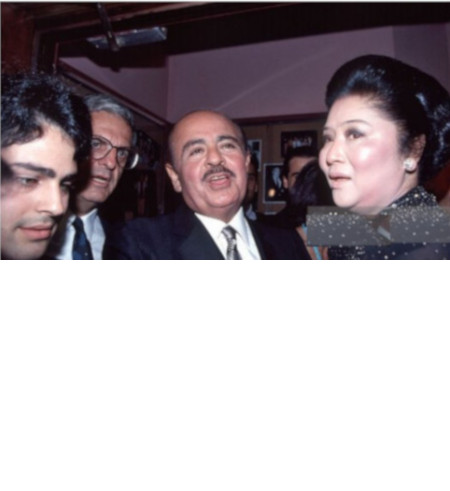
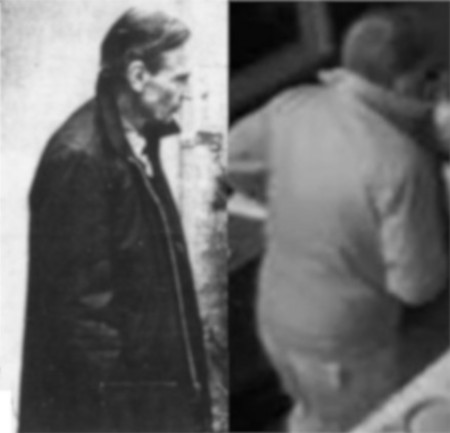
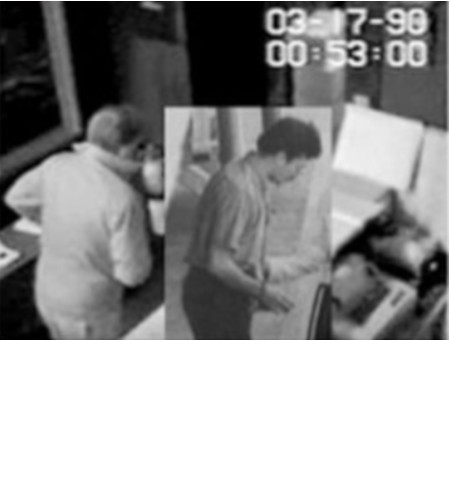
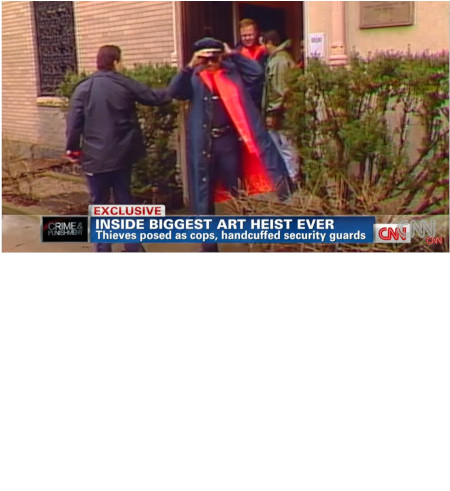
April 14, 2020: 43 Minutes
12:44 Museum fire alarm system inexplicably goes off. Guard Rick Abath abandons his rounds to respond to the alarm box in the basement. Abath shuts down the alarm system, which could pinpoint 30 places where a fire had started or a window broken. "Master Thieves" page 41.
12:53 Abath, on his rounds, passes through the Blue Room, where Manet's Chez Tortoni was stolen. It was the last time that motion detectors picked up any activity in this gallery. The motion detector did not record any movement in that gallery during the time the thieves were in the building.
01:04 Against protocol, Abath opens and shuts the Palace Road door then returns to man the security desk.
01:24 Two men, ostensibly identified themselves as Boston Police officers investigating a disturbance around the building and against protocol were allowed entry by Abath.
01:26 Without explanation, Abath calls the other guard on a walkie talkie and says: "Will you please come to the desk?" The other guard, coincidentally coming down the stairs to his first-floor rounds anyway, arrives in 10 seconds.
01:27 Abath steps out from behind desk, away from access to the only alarm linked to the police station.
January 8, 2020: What’s Behind The Latest Rift between the Gardner Heist Investigation and Arthur Brand
Perhaps because of the upcoming Gardner Heist 30th year anniversary, the New Year started off with a bang in that crawlspace where the Gardner heist investigation’s public relations effort is now stored. (It’s not a cool, dry place.)
Was it really twelve years ago now that Anthony Amore was saying he was “eager to deploy a ‘crowdsourcing’ approach to the crime, and use the Internet to distribute information and haul in data. ‘I know one thing,” Amore said, ‘I am not going to be able to recover these paintings on my own, in a vacuum, sitting here in an office. I need the collective intelligence of people from around the world.’"
That approach seemed to pay off in 2013. “Anthony Amore told the Boston Heald “it was a tip from a citizen in 2010 who called in with “new information about some matters that we had been looking into” that ultimately led to yesterday’s [March 18, 2013] blockbuster developments,”
Four years later, in 2017, Amore remained focused and determined, telling the New York Times, “I’ve spent more than a decade preparing for any scenario,” he said. “I’m very ready. I’ll go anywhere. I’ll meet with the devil for these paintings.”
By that time however, he had also seemed to have soured on receiving input from the public. “’We’re not looking for every armchair detective in Boston to send their theory,’ Amore said. “It’s been 27 years, and we’ve heard all the theories. Theories don’t lead to recovery. We’re looking for facts.’”
In a September 12, 2018 interview on Boston Herald radio, “Animal House Episode 39, Amore predicted that the then upcoming podcast, “Last Seen,” about the Gardner Heist, would lead to his being “flooded” with emails and phone calls. Notably, with his prediction came not even a smidgen of the optimism or hope of previous years. For Amore, it was obvious “crowd sourcing” had gone from opportunity to chore.
Additionally, Amore seemed intent, not only to discourage any input from members of the public but also to dismiss people who expressed views outside of a questionable and narrowly defined orthodoxy of the Gardner theft and the investigation, as cranks, crazies and conmen.
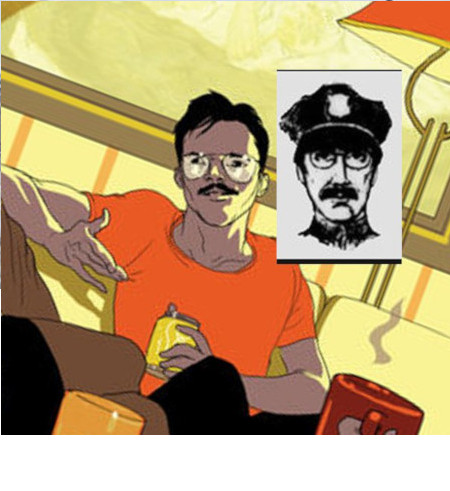
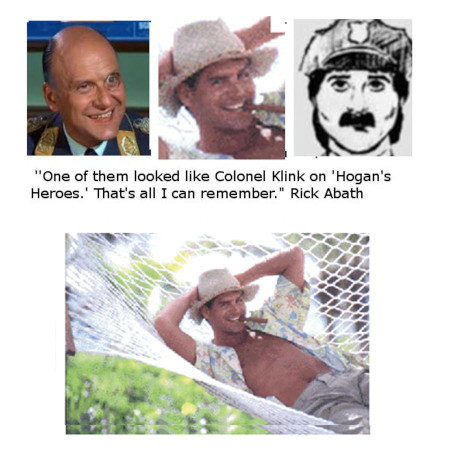
In that same Herald radio interview, when Hillary Chabot asked about Gardner heist guard Rick Abath’s statement that one of the Gardner Museum thieves looked like Colonel Klink, instead of just saying that Abath’s comparison had not led to any new developments, Amore replied. “I get a lot of theorists who send me pictures who look like Colonel Klink.”
Back in 2008, Amore said that the tips he receives “are projected against the total picture that I have in my database and in my memory. After you’ve studied this hard enough, you can do this mind-mapping thing where you do it in your head instantaneously.”
Indeed. But in 2018 Amore endorsed keeping the names of the thieves a secret, even though “the FBI did say the people we believe committed the crime are dead.” Because, “if I tell you who did it and we tell the public and this is my perspective, not the government's, I will go back to seven thousand phone calls on my desk from conmen…I am still to this day believe, it or not, inundated with phone calls and emails and letters, and most of the people are sending information that just send you down the wrong track, a lot of red herrings, so we need to focus, that's why we keep it proprietary.”
Real crowd sourcing in the case of the Gardner Heist would quickly turn into mob sourcing if the identify of dead thieves were released. Therefore, the investigation must resort to this policy of withholding the names of deceased known perpetrators, an investigative strategy that is unique in the annals of law enforcement in the United States.
By the end of 2018, Amore was ready to close off any meaningful exchange between the public and the investigation: "Don't believe the [Gardner Heist] books. Don't believe what you read in them. Suspend disbelief and know people are working really hard behind the scenes," Amore said on a podcast called The Horse Race, by WBUR pollster Steve Koczela (Time 27:26).
Suspend disbelief? So, the crowd sourcing is crowd saucing. I’m hip. Keep the art in the public’s face as much as possible, while flooding the information space with a head spinning array of suspects and possibilities, give a wink to anyone trying to make sense of it all, and just leave this effort to the professionals. Roger that... um, I guess.
But that brings us to this New Year, and a couple art recovery professionals, in fact two very high-profile professionals. First up, on January 1, 2020 was Chris Marinello, founder of Art Recovery International, which has “helped negotiate some of the most high profile restitution cases in recent years, such as the discovery and return of Matisse’s 1921 painting Seated Woman/Woman Sitting in Armchair, a Nazi-looted masterpiece.”
In his newsletter, on January 1st, Marinello announced that “with the consent of law enforcement,” he had “offered to serve as a pro-bono intermediary between the possessors and the museum. ARI will happily exchange the reward and artwork through attorney’s escrow. In this way, those collecting the reward will never have to deal directly with museum security or law enforcement.”
Interesting news. It sounds like a good idea. On Mob Talk #9, November 7, 2017, for example, Philly mob expert Dave Schratwieser reported that, according to one of his sources, organized crime “wants nothing to do with this.” The stolen Gardner art "is such a hot item, they want to be 100 miles away."
If mistrust has developed among certain, shall we say, segments of society, it makes sense to develop new channels of exchange for recovery of the art.
At this, Paul Hendry, a newcomer to twitter (@arthostage), but not to the Gardner Heist case, by any means,
tweeted out that same New Year’s day: “Gardner Museum & FBI Appoint Chris Marinello Official Pro-Bono Intermediary on the Gardner Art Heist case.” The tweet quickly garnered four likes, among the teeny-tiny universe of people on social media, who are thinking about the Gardner heist in January, not bad for a guy who had been on twitter for all of two weeks and had about a dozen followers.
That same day, however, Anthony Amore retweeted Hendry’s report with the comment: “Looks like the #FakeNews about the Gardner investigation in 2020 has started early. No one has been appointed anything by anybody.
Huh? Why was Amore, the “don’t believe the books, suspend disbelief guy” worked up about one little somewhat incorrect tweet by a guy in England with twelve followers? And then, Chris Marinello himself, was also critical, and harshly critical, of Hendry’s tweet the next day.
The use of the word “appoint” was an error, but in my view, an honest mistake, not #FakeNews certainly. Still, that term “appoint” could put someone off, if they were looking for a truly independent channel for returning the art and getting the reward.
The purpose, after all, is to provide a legitimate channel, not appointed by the “Gardner Museum & FBI.” It was important for Marinello, at least, to clarify the relationship, or in this case, the lack of one.
At the same time, there is not much point in being an independent channel, if no one knows about it. Paul Hendry is someone who subscribes to, and actually reads the Art Recovery International newsletter the day it comes out.
What followed next was a multi-day barrage of tweeted invective against Anthony Amore, with a little bit thrown in against Marinello by Paul Hendry, which kept the issue alive for a few days.
Since Arthur Brand was Hendry’s first follower on twitter, it is hard to believe Brand was unaware and missed the whole brouhaha over Hendry’s tweet of Marinello’s announcement. One way or another Brand knew about this initiative by Art Recovery International.
Then Brand tweeted: “Still working on the Isabella Stewart Gardner theft.” “And don’t believe those who say you can only deal with them. You can always talk with me. The FBI and the museum and their allies are not going to solve this case after 30 years. Move over,” reported Casey Sherman , a columnist in the Boston Herald,
Speaking to Brand by phone in Europe, he told me [Sherman] that he fired off the tweet in frustration and has since deleted the message.” After the Sherman column, though, consider how many people know about the Dutch investigator’s tweet now. File under “unintended consequences.” Or not. One question I have is, if Brand already has solid leads with people controlling some of the stolen Gardner Museum art, why is he trawling for new leads on twitter?
Later in his column Sherman wrote: “The FBI won’t comment on the art detective’s theory but when I reached out to Anthony Amore, the museum’s director of security, during an online conversation, he told me; “We have no comment on some guy’s (bleeping) twitter…” To call Arthur Brand ‘some guy‘ speaks to Amore’s institutional arrogance,” Sherman added.
Sherman pointed out that Brand is not "some guy." Dubbed "'The Indiana Jones of the Art World,' Brand made international headlines last year for finding and returning a $28 million Picasso painting that was stolen 20 years ago from a luxury yacht in the French Riviera.'"
The phrase "Some guy's (bleeping) twitter..." also illustrates the investigation's robust but nonetheless defensive posture. In his email, Amore switched the topic from the what, (the expressed need for an itemized stolen Gardner art price list), to the who (some guy) and the where (on twitter).
I would say refusing to give Brand an itemized price list might speak to institutional arrogance. Even if there is a back channel to make a transaction from Marinello or others, there is still the details of a deal to be hammered out and negotiated.
If a guy like Brand with a proven track record of recovering art says he needs an itemized price list, you would think they would just give it to him.
This treatment of Brand shows the formal Gardner theft recovery team is unwilling to delegate that portion of recovering the art. What is really of primary concern remains the provenance of any returned Gardner art.
As William Youngworth said on the documentary Stolen in 2005, before Anthony Amore knew anything about the Gardner heist: "The FBI takes this public posture that, listen we just want the stuff back, and we don't really care how it comes back. That's not true. I mean, I have sat there behind closed doors and they only have one agenda the only thing they want is names."
The number one priority remains making sure the original thieves do not benefit in any from the return of this stolen art. There will not be any deal with Arthur Brand, or Anthony Amore, or anyone else that involves any of the original thieves profiting from the robbery.
Give columnist Casey Sherman credit for calling into account one of Boston’s most sacred cows, the Gardner Museum heist investigation, and even putting a name and a face to it, though the ultimate responsibility belongs elsewhere, not with Anthony Amore.
Since the “Stolen” documentary came out, a few little additional facts have dribbled out, concerning what is known about the robbery. Bestowing a few facts on the public, however, came at the price of bestowing on the fact providers, the investigators, unchallenged control of the narrative, from a press growing more and more hungry for page views.
The problem with that is, as Callie Crossley observed on the WGBH program Beat The Press recently: When a fact is put in a context with a bunch of other b.s. then that degrades the actual fact. That is exactly what has happened with the Gardner heist story. People watching the documentary "Stolen" in 2005 had a better understanding of the Gardner heist; the investigation and the dynamics at play in the attempts at recovering the art, than people in 2020, because along a few little facts, has come a whole lot of um... spin.
Amore’s profanity garnished dismissiveness of the Dutch art recovery expert does demonstrate one thing, his complete certainty that the art is not coming back by way of Arthur Brand. It would be a serious misjudgment to think that Amore would let pride or arrogance stand in the way of getting the stolen Gardner returned.
Then, how can Amore be so sure Brand has no role to play? If not this year, then maybe five or ten years from now. That is the subject of my next blog post on Friday.
So how IS Amore so certain he can afford to burn this bridge with Arthur Brand? So sure
that Brand has nothing to offer now or in the future? Columnist Casey Sherman termed it an “online conversation,” when Amore said that “we have no comment on some guy’s (bleeping) twitter…” That means he had an opportunity to self edit his remarks, if he so desired. Amore hasn’t survived 15 years as unofficial explainer of a Gardner Heist investigation that keeps getting curiouser and curiouser, by being gaffe prone.
The effort to recover the stolen Gardner art is an active investigation. Activity means changes, though the public is not opted in on every development.
For example, on October 29, 2013, Amore said : "I haven't spoken to the thieves but I'm confident when the thieves went into the Gardner their assignment was Rembrandts.” [Time 1:110].
Just a year later, however, on November 12, 2014 Amore said: "I can't tell you specifics about the [Gardner Heist] thieves and what I know from them. All I can say about them is that they cannot lead us to the paintings today." Someone in the audience then asked what the question had been, and Amore replied: "The question was why can't the thieves lead us to the paintings and if I get into the weeds on that topic. I might be saying more than I should."
Over that one year period what Amore said in public about his knowledge of Gardner Heist related matters changed, very likely because of matters going on in the investigation that is not in public also changed. He even acknowledged that going into that topic “might be saying more than he should.”
Similarly, Amore’s public statements regarding Arthur Brand changed. In June of 2017, Brand predicated that he would have the stolen Gardner art back by the end of the year. This was just a few weeks after the Gardner Museum doubled the reward for return of the stolen art from $5 million to $10 million. The original story by Nina Siegal, in was in the Bloomberg European edition but the story with her byline was picked up by the Boston Globe and the Associated Press.
In that story Siegal wrote: “But there is one outside detective respected by Amore — Arthur Brand, a Dutch private investigator — who believes not only are the artworks still intact, but also that he can bring them home.” The article quoted Amore saying: “There are very few like him who understand the reality of this sort of crime.”
So how did this guy Brand become “some guy” in less than three years despite having made international headlines for his successful art recovery efforts during that period?
A lot of what happens in the Gardner Heist art recovery effort has to do with an certain kind of provenance, a clean break with the original thieves.
After William Youngworth claimed he could return the art, he complained: “They only have one agenda the only thing they want is names." William Youngworth obliged them. He said that the paintings were taken by Robert Donati, and David Houghton, both long dead. The pair had taken the art to spring Myles Connor for prison, as Connor had been claiming since 1992. (The fact that investigators persisted in asking Youngworth for names is one more reason to believe that the thieves were not Bobby Donati and David Houghton.)
But even if the paintings were not taken by the I.R.A. someone could be trying work through the I.R.A. and from the I.R.A. through Brand, as a channel to ransom the art back to the Museum. But as with William Youngworth, Brand and his contacts in Ireland would have to divulge names. They would have to be able to prove that the original thieves did not stand to benefit.
Initially Amore seemed to have kept an open mind, about Brand's bold claim, and it is hard to believe that Brand, even with all of his media savvy, would have made anything like the same kind of publicity splash in saying he could get the stolen Gardner art back by then end of 2017, without Anthony Amore, in effect vouching for him, in that initial story.
Two years later though, July 5, 2019, Amore told the Daily Beast, "he doesn’t do deals with thieves, even if it might mean the safe return of the treasures. 'Art hunters like Arthur Brand often negotiate with the smugglers and thieves, but is that something you can condone?' he asks. 'Anybody that can help us get our art back and acts ethically to do so is welcome, but the idea of paying thieves [for] art is unethical.'” Amore said.
In the original story, Brand was a "detective," in this July 2019 story, though he was an "art hunter." In any case Amore makes it quite plain, that as with Youngworth and others, there will be no deal for the Gardner art with the Gardner heist thieves. History as shown that even if the Museum wanted to pay off the thieves, as has been the case with numerous art thefts from museums, galleries and homes in the past. the FBI will not let the Museum make a deal with the thieves.
After Hawley left as director of the Gardner Museum and had taken a position as a resident fellow at the Harvard Kennedy School of Government, she said: “I’ve had complex experiences with the FBI as well as the Boston crime underworld. Early in the investigation, I was threatened with the charge of obstruction of justice when pursuing privately a lead that promised to crack open the investigation.”
Later, in 1994, the Gardner Museum received a ransom demand for $2.6 million for return of the stolen art. The Museum was clearly willing to meet the terms of the ransom note writer but the FBI clearly was not. A second letter arrived from the ransom note writer stating:
“I think it important to say right now that you have a choice, that is you may be able to apprehend a low-level participant who has been kept in the dark or you can recapture the entire collection intact. YOU CANNOT HAVE BOTH."
"Hawley was dumbfounded. She had impressed on Swensen and others at the FBI her hope that the letter writer was legitimate and that everyone needed to follow his instructions to the letter."
"That word had filtered down to the handful of agents who were directly responsible for the case."
“'We were told to stand down by Swensen, and that’s exactly what we did. No calls were made, no one was interviewed,” says one agent working the case at the time."
"However, he said, that word may not have reached everyone inside the Bureau. Agents in the Boston and New York offices were working feverishly to track down the letter writer’s identity, the agent said."
“'There was no complete stand-down,' the agent admitted. 'Far from it.'” Master Thieves by Stephen Kurkjian [pages 81-82].
But things change. The policy could change. Brand might have seen the announcement on January 1, 2020, by Chris Marinello, that he had been cleared to serve as an independent escrow, as a sign of change, or he might have been adding himself to the efforts of those who want a change in policy, which would allow someone to return the art for the reward no questions asked, instead of many, many questions asked, as has been the case in the past.
Without knowing where the art is, the investigation may know not only who did the Gardner art heist, but who controls it.
PART THREE
If the stolen Gardner art is held hostage, simply knowing who the thieves are, and even knowing who controls the art would not necessarily translate into getting it back. During the Iranian hostage crisis, which began in 1979, for example, the United States knew who had taken American citizens, they knew who controlled these hostages, they even knew where these hostages were located, but it still took 444 days to get them freed.
The FBI’s Geoff Kelly, who has spearheaded the Gardner heist investigation for 18 years, and former Gardner Museum director Anne Hawley, who was the museum director form the time of robbery in 1990 until 2015, have both stated that at times they were convinced the Gardner art would soon be returned, only to have their hopes dashed. There have been numerous contacts with people who have persuaded the authorities, the museum, and investigators that they could return the Gardner art, or that they have specific knowledge of its whereabouts.
Several, though not all ,of these offers to return the stolen Gardner art were covered by the news media. While some were hoaxes, some credible offers also appear to have been made, or never fully discredited. A major stumbling block seems to be that a member or members of the original group, who robbed the Gardner museum, still control the art.
Although the FBI began saying the thieves were dead in 2015, while hinting about criminals who died shortly after the robbery, just two years earlier in 2013, the FBI had said that as late as 2003, the art was still known to be controlled by the thieves:
“’The FBI believes with a high degree of confidence in the years after the theft the art was transported to Connecticut and the Philadelphia region and some of the art was taken to Philadelphia where it was offered for sale by those responsible for the theft .’ Richard DesLauriers, special agent in charge of the Boston office of the FBI, said.”
“Tell them they’ll be hearing from us,” the intruders told the guards,” but we only have the words of reporters like, Stephen Kurkjian, without sourcing that “they’re never heard from again.”
We now know that people who purported to have the art or information about the art were ignored by the authorities. Investigators were not even interested in speaking to potentials thieves, in some cases, early in the investigation.
In October of 2013, the museum director Anne Hawley said that shortly after the theft. "The museum was experiencing these bomb threats coming from people in penitentiaries that were trying to negotiate with the FBI on information they
said they had — and the FBI wasn’t responding to them so they were hitting us.”
Hawley reiterated those claims, which had never been reported in the press until 2013, on camera, six weeks later: “We also were being threatened from the outside by criminals who wanted attention from the FBI, and so they were threatening us, and threatening putting bombs in the museum,” “We were evacuating the museum, staff members were under threat, no one really knew what kind of a conundrum we were in.”
Why were these bomb threats never reported to or by the media until decades later? Why did the FBI refuse to contact these people, as Hawley says, if for no other reason than to prosecute them for threatening the museum and staff, or at least get them to stop?
Hawley retired as director of the Gardner Museum at the end of 2015, but only a few months later, as a resident fellow at Harvard’s Institute of Politics, she wrote: “Early in the [Gardner heist] investigation, I was threatened with the charge of obstruction of justice when pursuing privately a lead that promised to crack open the investigation.
This is backward. Instead of the robbers threatening the victim not to contact law enforcement, you have law enforcement threatening the victim, not to contact the robbers.
Later, in 1994 there was a ransom note, which Hawley considered the most credible lead they Museum ever received during her tenure, but did not result in the return of the stolen Gardner art, possibly because of the FBI’s was unwilling to “stand down” as was stipulated in the ransom demand:
“Hawley was dumbfounded. She had impressed on Swensen and others at the FBI her hope that the letter writer was legitimate and that everyone needed to follow his instructions to the letter. That word had filtered down to the handful of agents who were directly responsible for the case.”
“We were told to stand down by Swensen, and that’s exactly what we did. No calls were made, no one was interviewed,” says one agent working the case at the time. However, he said, that word may not have reached everyone inside the Bureau. Agents in the Boston and New York offices were working feverishly to track down the letter writer’s identity, the agent said. “There was no complete stand-down,” the agent admitted. “Far from it.” —Master Thieves page 80-81
Once again in 1997, the Museum demonstrated a willingness to make a deal with someone who claimed they could get at least some of the stolen Gardner art back, William Youngworth, but authorities were not persuaded he was being truthful about some aspects of his story, and would not guarantee him and other parties immunity from prosecution if they returned the art for the reward.
In 2005 documentary “Stolen,” Youngworth said: "The FBI takes this public posture that ‘listen we just want the stuff back and we don't really care how it comes back.’ That's not true. I mean I have sat there behind closed doors and they only have one agenda the only thing they want is names. In another interview, five years earlier he said: "’Basically, the FBI’s currency is image. If they can't kick in a door and hold a press conference, then they don't want to deal with it,’"
Twenty years later, the FBI is still dealing with it and the effort has done nothing to bolster or preserve a positive “image” for the FBI. Youngworth may have had a point, though, about the FBI wanting “to kick in a door,” but in the sense of not being willing to negotiate a return. The same Guardian article reported: the “attorney general’s office in Washington warned against pandering to “cultural terrorism,” a statement that would seem to suggest an unwillingness to negotiate anything of value in return for the art.
The only deals offered to Carmello Merlino and Robert Gentile, who also had made claims of having access to the missing Gardner artworks, were the dropping of Gardner theft related charges, as well as charges brought about as the direct result of efforts initiated by informants in an effort to get the art back. “Why would Mr. Gentile not lead investigators to the missing trove and collect a share of the $5 million reward being offered by the museum?” Gentile’s lawyer asks. It’s truly a hypothetical question since, if a reward offer was made to Gentile, it has never been made public.
While there are those who decry the practice and warn against it, there are numerous examples in the news media of museums making a deal with thieves for the return of stolen art.
In the early 2000s the Tate Gallery in London successfully negotiated for the return of two J. M. W. Turners that were stolen in 1994 while on loan. Having bought back the title to the paintings from the insurers, the Tate delivered around $5.6 million to a lawyer, for information leading to the return, but some in the art world interpreted it as a ransom. British and German authorities approved the exchange.)
Others have stood firm against paying a ransom. Five Old Master paintings, worth millions, stolen in East Germany’s most notorious art heist were recovered after 40 years it was reported this month. “The art was quietly returned last September, arriving in Berlin by van, and no ransom was paid.”
Whether it is ethical or practical to pay a ransom, the Gardner heist may be unique in the way that law enforcement authorities have been so actively involved in preventing the museum from paying the reward, making a deal, getting their art back, on terms the museum at least, finds acceptable, even if law enforcement does not.
The Gardner Museum has at times seemed to demonstrate a willingness to pay a ransom for the return of their artworks, no questions asked, although their words on the topic have been less than unequivocal.
The Boston Globe did report in 2017 that: “Anyone, aside from the thieves themselves, is eligible for the full reward, Anthony Amore said.” In 2019, however, he was quoted by the Daily Beast that: "Thieves, or anybody holding the stolen Gardner art, can go through an attorney to get the reward.”
Also in 2019, a lead story in the Boston Herald last year began: "To the two thieves posing as Boston cops who ripped the soul out of the Isabella Stewart Gardner Museum nearly three decades ago: There’s $10 million waiting for you, no questions asked." The museums actions and most recent words suggest a willingness to negotiate with anyone, even the thieves who stole the art. If the Museum is not willing to pay a reward that might financially benefit the thieves, they have failed to make that position clear.
If it turns out that the art is in Ireland, as Arthur Brand claims, and comes with a murky backstory as to “the who” and “the where,” stretching back to the pre-Good Friday Agreement days of the Irish Republican Army, federal authorities may be limited in their jurisdictional authority to hold up a deal, that the Museum is willing to make. Any agreement would have to be sanctioned or approved by law enforcement authorities in the United States.
Would American officials have the inclination and clout to block a deal consummated in another country, with a non-criminal, such as Arthur Brand, given their own lack of credibility and success in investigating the Gardner robbery and making a recovery?
William Youngworth tried to take his case to the media and lost, but the media landscape has changed quite a lot in the past 20 plus years. Dubbed the Indiana Jones of art recovery, Arthur Brand has a stronger personal reputation than Youngworth too and he is more skilled in media relations. As a law-abiding citizen of the Netherlands, not the United States there may be limits on what federal authorities can do if the Museum is intent on accepting a deal for the art offshore in such a case.
Youngworth had his advocate of sorts in the Boston Herald’s Tom Mashberg, only after he was in the thick of negotiations, which were rapidly turning sour. In contrast, the groundwork is already laid for Brand, who regularly garners press attention for his art recovery exploits, and even has a Boston Herald columnist, author Casey Sherman, taking his part over differences he has with Gardner Museum director Anthony Amore over the direction of the stolen Gardner art recovery effort, or perhaps more accurately with differences Amore has with Brand, over his criticism of the investigation.
Some may remember that a production company co-owned by Sherman, bought the film rights “Stealing Rembrandts” a 2011 nonfiction book written by Amore and Mashberg. Although often misidentified as a book about the Gardner Heist by the Boston Globe , it is actually about several high profile stolen Rembrandt cases that “omitted the Gardner case because Mr. Amore said the hunt [for the stolen Gardner art] had reached a delicate phase. ”Mashberg explained in an article about new development in the Gardner heist investigation for the New York Times in 2015 called “Isabella Stewart Gardner Heist: 25 Years of Theories”
“We have a strong vision for this film and are excited to be partnering with two renowned art theft experts such as Amore and Mashberg on this project,” Sherman said in a statement.
It is hard to know how the Museum and American federal law enforcement would respond if Arthur Brand and media accessorized art recovery juggernaut tendered an offer to return the stolen Gardner art in exchange for the reward from oversees.
PART TWO
